The Shilpgram Festival, at the End of December
A week of craft, folk music and food on the edge of Udaipur. What is in the artisans' village, what happens in the amphitheatre after dark, and what time of day to arrive.
- culture
- festival
- udaipur
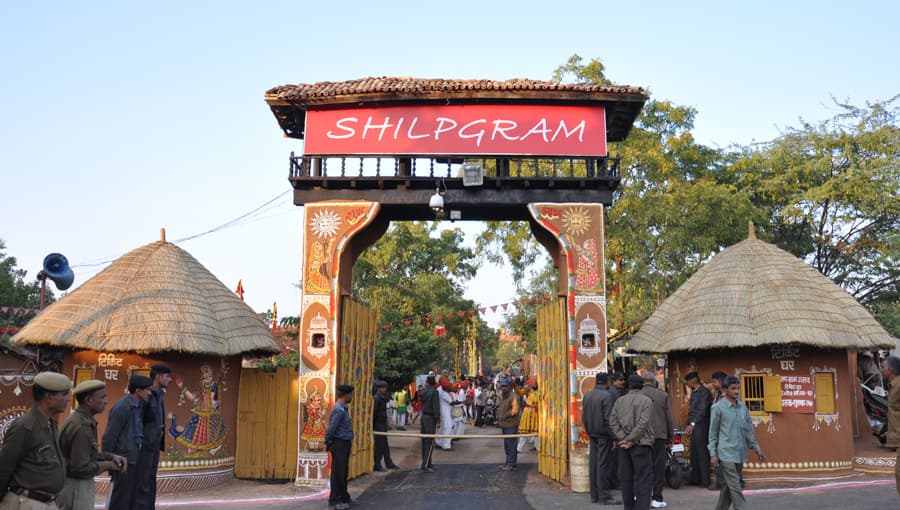
What it is
Shilpgram is a craft village on the edge of Udaipur, run by the West Zone Cultural Centre, and for a week at the end of December it holds the fair it is named for. The name means village of crafts, and the fair is the literal version of that. Artisans come from across the country and sell what they make, folk musicians and dancers perform in the amphitheatre each evening, and a food court runs alongside both.
The artisans' village
This is the reason to come. Madhubani painters from Bihar, Bandhani dyers from Gujarat, potters, silk weavers, people who make wooden toys. Most of them work at the stall rather than stand behind it, so you can watch a thing being made before you decide whether you want it, which is not an experience the shops in town can offer.
Buy from the stall rather than from a shop afterwards. The money goes to the person who made the object, and that is the whole argument for a fair like this existing.
The evenings
The amphitheatre programme starts once the light goes. Kalbelia dancers, dhol, the Ravanhatta, Rajasthani folk songs, and dances from Gujarat, Maharashtra and Goa. If you are only going once, go for this, and treat the stalls as what you do until it starts.
The food
The food court is western India rather than Rajasthan alone: Laal Maas, and stalls from Gujarat, Maharashtra and Goa. A number of them are run by home cooks working from family recipes, which is the difference between this and every other food court you have eaten in.
Workshops
If you would rather do than watch, there are workshops through the day: pottery, the basics of block printing, folk dance steps. They are run by the artisans themselves rather than by anyone employed to run workshops.
Going
The gates take you in between ten in the morning and seven in the evening, and the fee is small; the exact numbers are in the visit details above. The dates move a little from year to year, so check them for the year you are travelling rather than trusting a date you read once.
Arrive in the second half of the afternoon. You get the stalls in low light, dinner while the food court is at its best, and then the performances once it is dark. Going in the morning gets you the crafts and misses the part most people come back for.