A Slow Guide to Fateh Sagar Lake
Fateh Sagar rewards three short visits in a day more than one long one. The morning walk, the boat to Nehru Garden, the evening chai and where to stand at sunset.
- udaipur
- fateh sagar
- things to do
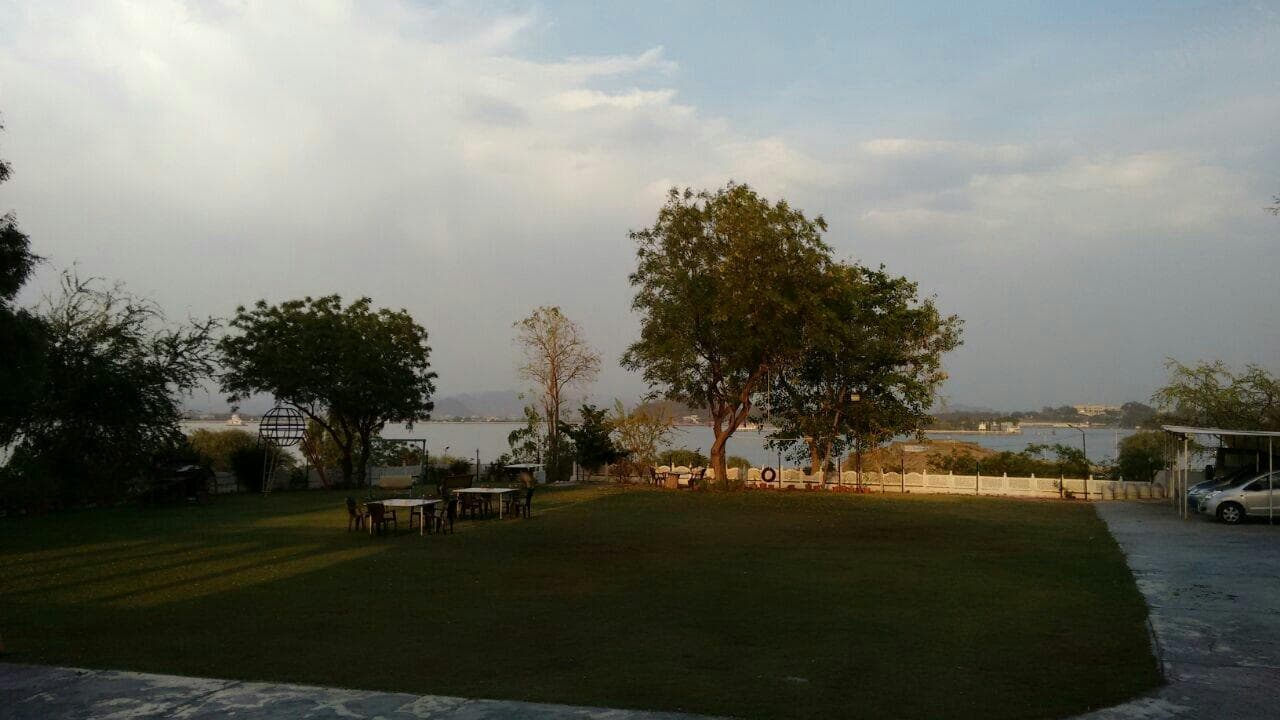
The lake, and why it rewards slowness
Fateh Sagar lies along the northern edge of Udaipur, a long sheet of water held between the Aravalli hills and the city. It was built in the seventeenth century, washed out by a flood, and rebuilt under Maharana Fateh Singh, whose name it kept. Most visitors give it an hour: a boat, a photograph, back into the car. That is a waste of a good lake. Fateh Sagar is one of the few places in Udaipur that genuinely changes character across a day, so the way to see it is to come back to it three times rather than to stand at it once.
Mornings belong to the walkers
The road around the water fills up early. People walk it before the heat arrives, in pairs and in loud groups, and cyclists take the outer lane. The water is flat at that hour and the hills on the far side are still blue rather than brown. Chai and coffee carts set up along the railing not long after dawn, and a paper cup in your hand while the light comes up over the lake is the cheapest good thing in this city. If you want Fateh Sagar to yourself, this is the only hour you will get it.
For a longer morning, the climb to the Neemach Mata temple starts from the lake and goes up the hill on stepped paths. It takes real effort for about half an hour, and the view from the top holds the whole of Fateh Sagar with the city stacked behind it. Go early. There is almost no shade on the way up, and it is a different walk entirely once the sun is high.
Three islands, and the boat out to Nehru Garden
The lake holds three islands. One carries a fountain, one carries the Udaipur Solar Observatory, which is a working scientific station rather than a visitor attraction, and the third holds Nehru Garden. That last one is the one you can land on. Boats run from the Rani Road side of the lake, and the crossing is short. Check the current timings and rates on the day, since both change, and go on a weekday if your dates allow it. Weekends fill the boats with families and the garden with noise.
The ride matters as much as the destination. From the middle of the lake you get the shape of the whole thing at once: the embankment on one side, the hills coming down to the water on the other, the city reduced to a low white line. Sit on the side facing the hills.
Moti Magri, for the view from above
Moti Magri, or Pearl Hill, rises on the eastern side of the lake and carries the memorial to Maharana Pratap, with the bronze of him mounted on Chetak at the top. Terraced gardens run up the slope. It is ticketed, so check current timings before you plan an evening around it. The statue and the memorial are the reason it exists, but the reason to climb it as a visitor is the view: Fateh Sagar laid out flat below you, which is a thing you cannot get from the shore.
Saheliyon-ki-Bari, a short detour
Saheliyon-ki-Bari, the Garden of the Maidens, sits a short way from the lake and was laid out for the women of the royal household. It is small and you can see it properly in half an hour: lotus pools, marble pavilions, and fountains that were originally fed by gravity from the water above rather than by any pump. It is at its best in the monsoon and the weeks after it, when the fountains are running well and the bougainvillea is out. Check current timings, and treat it as a stop rather than an outing.
Evenings, chai and roasted corn
Around five o'clock the lake changes hands. Families arrive, the corn seller lights his coals, and the promenade turns into the city's front garden. Roasted corn with lime and masala, kulfi, chaat and endless small glasses of chai: this is street food as a social ritual rather than a meal, and it is worth doing at least one evening even if you have eaten. The northern end of the lake, around Sukhadia Circle, keeps going later than the rest and is the noisiest, most cheerful stretch of the whole shore.
Sunset, and where to stand
The sun goes down behind the Aravallis on the far side of the water, which makes the entire eastern shore one long viewing gallery. You do not need a special spot, only a place to sit facing west with something to drink. The gardens along the shore, including Rajiv Gandhi Park, give you grass and a little distance from the traffic. The colour holds for a good twenty minutes after the sun has actually gone, and most people leave too early. Wait for the second half of it, when the water goes the colour of the sky and the hills flatten into silhouette.
Staying on this side of the water
We are on Rani Road, near Rajiv Gandhi Park, which puts us on the lake's shore rather than in the old city. The advantage is not really the view, although there is one. It is that the morning walk, the boat jetty and the sunset are all a short stroll from the gate, so you can do them on impulse rather than by arrangement, and go back to the room in between.
A slow day, in order
Walk before eight. Eat breakfast slowly. Give the middle of the day to a book or a nap, because in Udaipur it belongs to nobody. Take Saheliyon-ki-Bari or Moti Magri at around four, be on a boat by five, buy corn at six, and be sitting down facing west by half past. That is a whole day at Fateh Sagar, it costs very little, and it will be the day you remember longest.